Should You Seal Your Driveway After Pressure Washing?
Whether to seal your driveway after pressure washing: sealing benefits, ideal timing, cost vs longevity, and stain prevention.
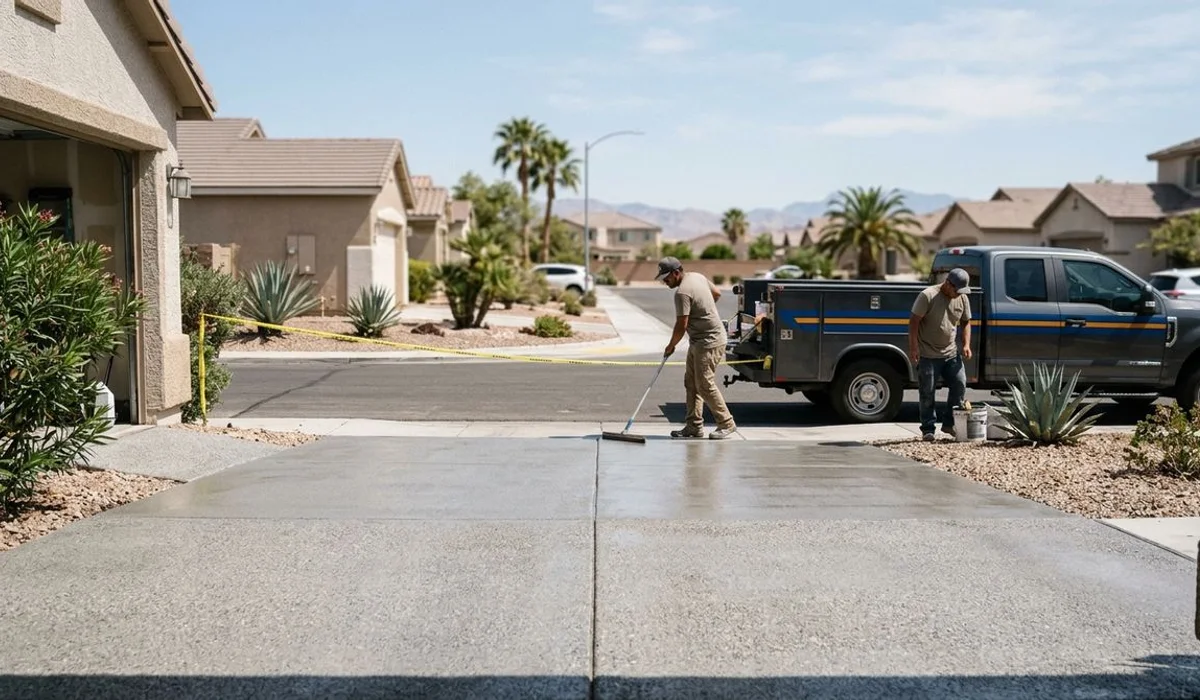
We often hear commercial property managers ask, should I seal driveway after pressure washing, especially after completing a massive deep clean.
Constant exposure to the intense Nevada sun and heavy vehicle traffic makes this a critical decision for your maintenance budget. You need facts to justify the expense to an HOA board or property owner.
Our team will break down the data behind concrete protection, the exact drying times required, and the true return on investment.
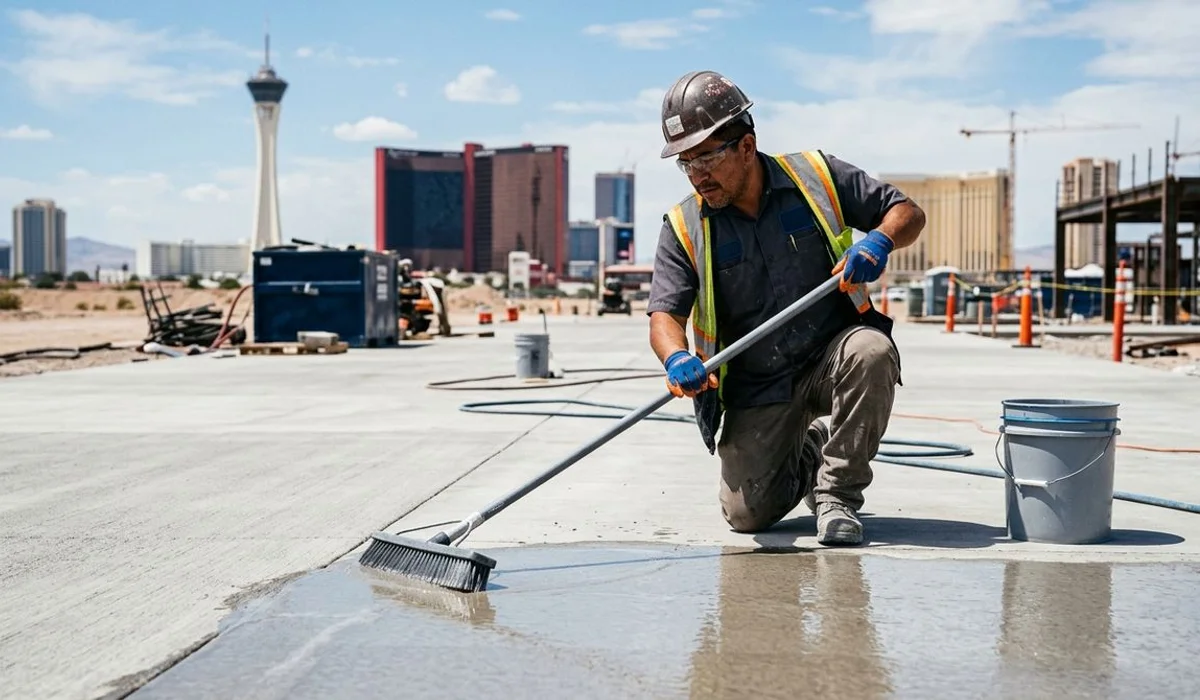
Sealing benefits (stain/UV/erosion protection)
Yes, you must seal concrete driveway surfaces to block UV fading, repel oil stains, and stop surface erosion. Applying a professional-grade penetrating sealer acts as a waterproof shield for the porous concrete structure. We evaluate specific driveway sealing benefits before choosing a chemical treatment for your property.
Penetrating silane-siloxane sealers physically reduce water absorption to stop surface spalling. This proactive protection prevents the cracking that plagues unprotected commercial parking pads, and a sealed slab also makes it far easier to handle removing oil stains from a concrete driveway down the road. Our application method has to match your precise material perfectly.
High pressure works for durable concrete, soft washing handles stucco, and pure water cleans solar setups. A successful schedule must fit smoothly into your daily property operations. We coordinate overnight shifts for commercial spaces and daytime slots for HOAs.
Every project standard has to meet strict local environmental regulations. Your property stays compliant with EPA guidelines, Southern Nevada Water Authority restrictions, and city codes.
Our technicians recommend sealing to secure these specific operational advantages:
- UV Resistance: Blocking ultraviolet rays prevents color fading on decorative concrete.
- Chemical Defense: Creating a barrier stops vehicle fluids from penetrating the slab.
- Our Moisture Control: We ensure your surface resists weather-related degradation year-round.
- Easier Maintenance: Cleaning a smooth surface requires much lower water usage.
- Lasting Results: Getting the method right means the final product lasts.
Ideal timing after cleaning
We strongly advise waiting 24 to 72 hours before applying any sealant over a freshly washed driveway. The concrete must be completely dry to prevent trapping moisture inside the porous slab. Rushing this crucial window leads to a cloudy, milky-white finish known as blushing.
Our crews always perform a detailed visual inspection before opening any sealant containers. A driveway baking in direct Las Vegas sunlight dries significantly faster than a shaded walkway. Applying an acrylic topcoat over damp concrete causes poor adhesion and immediate delamination.
We factor in humidity levels and slab thickness to calculate the precise curing schedule. High humidity extends the necessary waiting period by a full day. The right timing prevents blistering as trapped water vapor tries to escape through the chemical barrier.
Our standard drying timetable helps property managers plan their operational downtime accurately.
| Weather Condition | Average Drying Time | Primary Risk if Rushed |
|---|---|---|
| Direct Summer Sun | 24 Hours | Flash curing on the hot surface |
| Partial Shade | 48 Hours | Milky white cloudiness |
| High Humidity | 72 Hours | Complete chemical delamination |
Getting the schedule right ensures the final protective coat bonds properly. The application work disappears into the background when scheduled correctly around tenant activities.
Cost vs longevity; bridge to concrete sealing
We constantly remind HOA boards that proactive maintenance costs a fraction of complete driveway replacement. A 2025 Angi industry report shows professional commercial sealing averages between $1.35 and $2.50 per square foot. Tearing out and pouring a brand new concrete slab easily exceeds ten times that amount.
Our financial analysis confirms that routine coating generates a massive return on investment. A specialized polyaspartic or silane-siloxane layer prevents freeze-thaw damage during colder months. The barrier stops minor hairline surface cracks from spreading into severe structural failures.
We recommend a consistent two to five-year application cycle for maximum asset protection. This timeline keeps costs predictable and avoids emergency mid-year budget approvals. Routine upkeep preserves the existing material instead of forcing an expensive structural restart.
Our cost-benefit breakdown highlights exactly why delaying this service drains community budgets:
- Initial Savings: Preventive applications stop deep structural water intrusion.
- Property Value: A clean parking surface improves the curb appeal for prospective tenants.
- Our Promise: We guarantee that properly maintained lots require far fewer spot repairs.
- Liability Reduction: Filling small gaps prevents tripping hazards for pedestrians.
- Longevity: A quality product extends the usable life of the pavement by decades.
Bottom Line
Our team can quote your specific property and definitively answer should I seal driveway after pressure washing for your exact layout.
See our parent service page for full details on the work involved. You can also request a free quote to get same-day pricing across Las Vegas, North Las Vegas, Henderson, and Summerlin.
We back every single job with a comprehensive money-back guarantee. Protecting your pavement investment has never been easier. A simple phone call puts your maintenance plan on the right track today.