How to Remove Spray Paint from Brick, Stucco, and Block Walls
How spray paint is removed from brick, stucco, and block walls, why porous surfaces are hardest, and the pro chemistry that lifts graffiti.
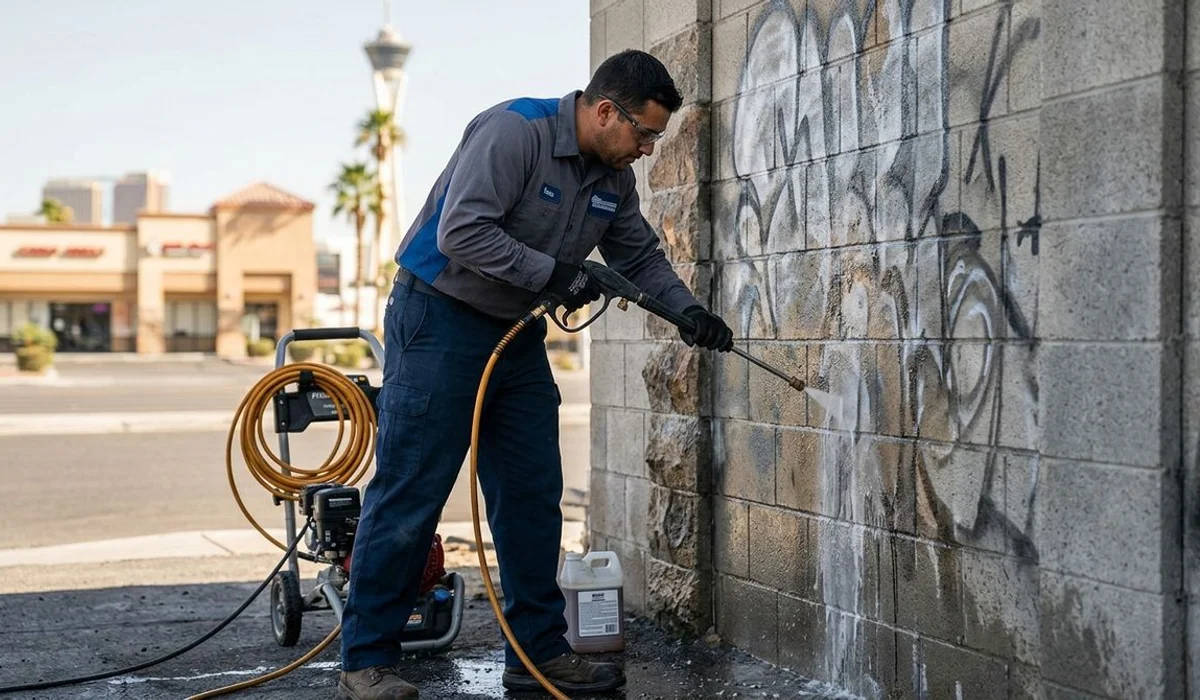
Dealing with surface-specific graffiti is a recurring headache for Las Vegas property managers.
Our team sees exactly how quickly a single tag can attract copycats if left untreated. The secret to safe removal is understanding that paint bonds differently to porous block than it does to delicate stucco.
We will break down the exact methods used for brick, stucco, and block walls. Let’s look at the facts, what they actually mean for your property, and explore practical ways to respond while staying compliant.
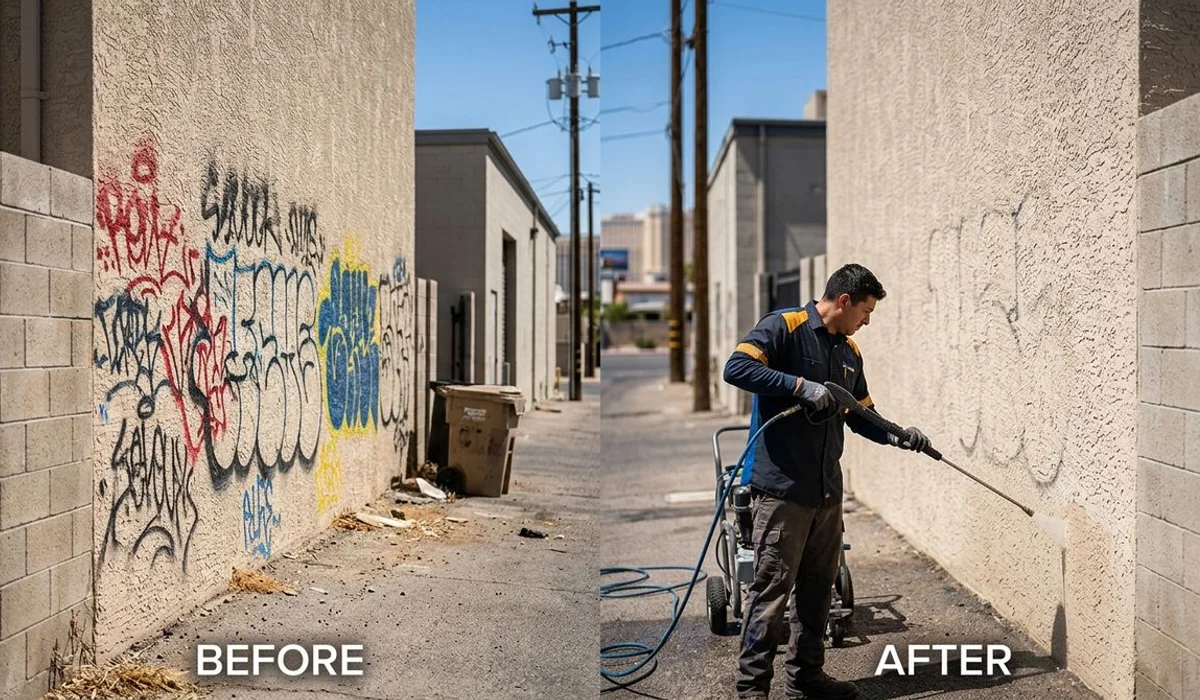
Removal methods by surface
The most effective way to remove spray paint without property damage is to match the chemical solvent to the exact porosity of the wall. Our technicians never use a one-size-fits-all approach for exterior cleaning. You have to adjust the water pressure and the detergents based on the building material.
| Surface Material | Recommended Solvent | Maximum Safe PSI |
|---|---|---|
| Brick | Taginator or Elephant Snot | 1,000 PSI |
| Stucco | Biodegradable Soft Wash Mix | 500 PSI |
| Block Wall (CMU) | Heavy-Duty Gel Solvent | 1,500 PSI (Hot Water) |
For brick surfaces, the goal is to dissolve the paint without blowing out the mortar joints. We apply a heavy-duty masonry solvent like Taginator or Elephant Snot and let it sit for about 15 minutes. This dwell time allows the gel to eat through the paint layer. Our crew then uses a wide 40-degree tip at under 1,000 PSI to remove spray paint from brick safely.
For safe graffiti removal, stucco requires a much more delicate touch to prevent cracking or water intrusion. We utilize a soft washing technique for these brittle surfaces. Effective treatments rely on biodegradable detergents and specialized nozzles, like the EcoBoost, to clean the wall at under 500 PSI. The gentle flow safely lifts the pigment away.
Cinder block walls present the biggest challenge due to their deep texture. Our process involves flooding the concrete masonry unit with a thick graffiti remover that clings to the vertical surface. Treating a spray paint block wall requires a hot water rinse to pull the stubborn aerosol out of the deep pores.
Why porous surfaces are hardest
Cinder block and brick act like rigid sponges that pull aerosol paint deep into their microscopic air pockets almost instantly. Our experience shows that the faster you treat these materials, the better your chances are of a complete removal. Once the paint fully cures inside the pores, it becomes incredibly stubborn.
Many property owners make the mistake of immediately grabbing a high-pressure wand. We strongly advise against blasting porous masonry with 3,000 PSI. High pressure will simply etch the stone, strip away the protective outer layer, and drive the pigment even deeper into the wall.
You will end up with permanent surface damage and a visible shadow of the original tag. Our strategy shifts the workload from the machine to the chemistry. Extended chemical dwell times do the heavy lifting instead of brute force, which is part of what to expect from professional graffiti removal.
Here are the most common pitfalls to avoid when treating porous masonry:
- Skipping the dwell time: Solvents need at least 15 to 20 minutes to break down the binders in spray paint.
- Using cold water only: Hot water systems melt the paint much faster than cold water setups.
- Painting over without a primer: Spray paint will bleed right through a fresh coat of standard latex paint if you skip the primer.
- Getting too close with the wand: Keep the spray nozzle at least 12 inches away to protect the mortar joints.
Professional chemistry and safety
Las Vegas regulations strictly control how contractors handle the chemical runoff generated during graffiti removal. Our operations must comply with Southern Nevada Water Authority mandates at all times. The rules clearly state that wash water cannot be allowed to flow off the property or enter the storm drains.
These environmental protections ensure that paint flakes and harsh solvents do not contaminate Lake Mead. We use specialized containment booms and vacuum recovery systems to capture the dirty water. The reclaimed wastewater is then safely routed to a sanitary sewer cleanout.
Meeting local compliance standards
Speed is another critical factor for commercial properties in Clark County. Our teams know that a visible tag invites more vandalism within 48 hours. Nevada law (NRS 268.408) actually requires cities to abate graffiti on public property within 15 days, but most private Homeowner Associations demand action within 24 to 72 hours.
Getting the chemistry right means the result lasts, but getting the compliance right keeps you out of trouble. We manage the entire process so property managers never have to worry about fines or code violations.
Bottom Line
Fast action is the best defense against repeat vandalism. Our experts are ready to evaluate your property and recommend the safest approach for your specific building materials.
See our parent service page for full details on the chemistry and equipment used.
If you need immediate help, request a free quote to get same-day pricing across Las Vegas, North Las Vegas, Henderson, and Summerlin. We back every job with a money-back guarantee, so you can book with complete confidence.